









Air Compressor Filters Explained — Air Filter, Oil Filter & Air Oil Separator
Air Compressor Filter Element Materials and Construction
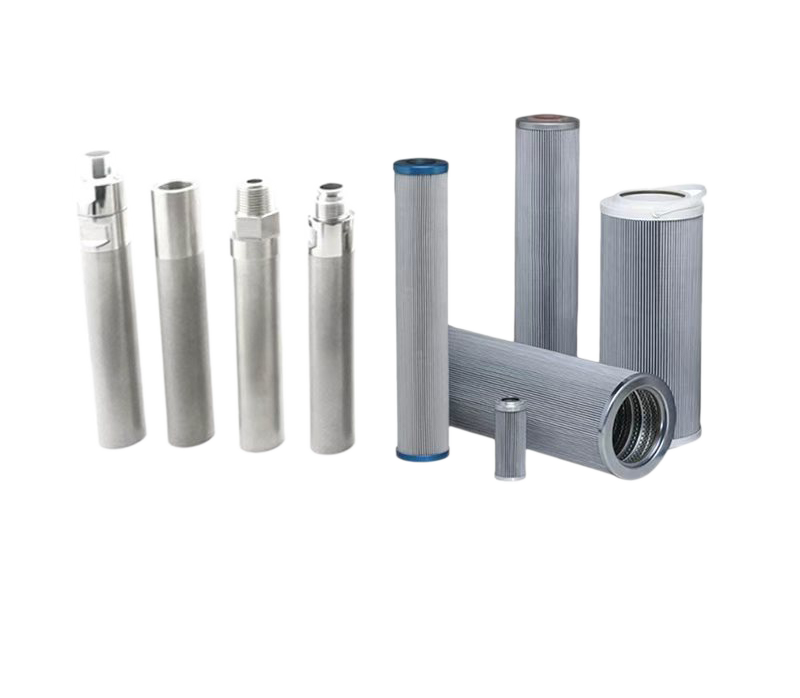
Two air compressor filter elements can look identical and perform very differently — the difference is inside. Filter media is the first variable: cellulose (paper) media is economical and adequate for intake duty, while fine coalescing and oil filtration demands borosilicate glass fiber. Leading separator manufacturers specify media from established producers such as Hollingsworth & Vose (HV) or Lydall, because fiber diameter consistency directly determines separation efficiency and pressure drop stability.
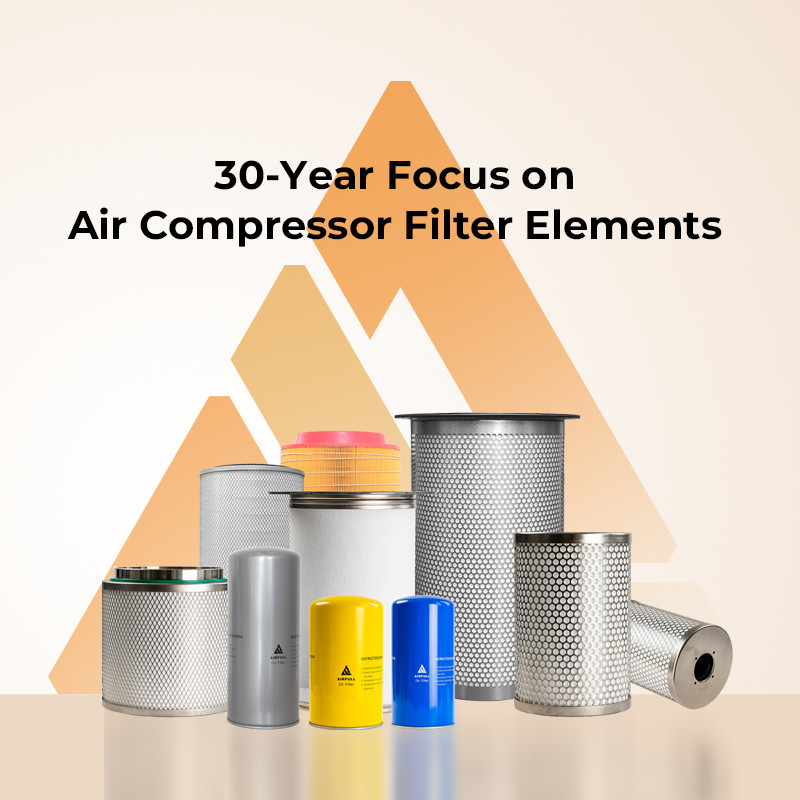
Construction details matter just as much: galvanized or stainless center tubes that resist collapse at high differential pressure, metal end caps with bonded (not glued) seals, and oil-resistant nitrile gaskets that maintain compression set over thousands of thermal cycles. Deep, uniform pleating increases effective surface area — and surface area is what buys dirt-holding capacity and service life. When evaluating air compressor spare parts, ask the supplier for media source and construction specs, not just dimensions.
The Hidden Cost of a Clogged Filter
Filter elements are consumables, so buyers naturally focus on purchase price. The operating logic points the other way. As a filter element loads with contaminants, its differential pressure rises — and the compressor must generate additional pressure to push the same volume of air through it. That extra work is paid for in electricity, every hour the machine runs, until the element is replaced.
A clogged separator or intake filter also triggers secondary costs: higher discharge temperatures stress the lubricant and shorten its life; oil carryover contaminates downstream dryers, valves, and instruments; and a starved intake reduces free air delivery, so the compressor runs longer to do the same work. Set against these running costs, a compatible element is the smallest line item in the maintenance budget.
The conclusion is not that filters should be changed early and often — over-maintenance wastes money too. It is that compatible decisions should follow differential pressure readings and documented intervals, not guesswork. A filter changed on schedule is controlled maintenance; a filter changed late is an invisible tax on every kilowatt-hour.
How to Build a Compressor Filter Kit for Scheduled Maintenance
Plants that manage filtration well buy it as a system, not as individual emergencies. A compressor filter kit groups the elements due at each service interval, so a technician never reassembles a machine with one worn element left inside. Kit-based purchasing also simplifies inventory for distributors: one part number covers a full service event.
When ordering a kit, match it to the compressor model or OEM part numbers rather than dimensions alone; reputable suppliers maintain cross-reference databases covering major brands. (Our brand cross-reference guides — including the Atlas Copco, Ingersoll Rand, and Sullair/Kaeser/CompAir charts — go deep on this topic.) Buying the full kit from one qualified air compressor filter supplier also keeps warranty responsibility in one place.
FAQ About Air Compressor Filters
Q1: How often should air compressor filters be replaced?
Follow the compressor manufacturer's service schedule as the baseline, and replace earlier whenever differential pressure reaches the specified limit. Dusty, humid, or high-temperature environments shorten all filter intervals.
Q2: What happens if I don't replace the air oil separator on time?
Expect rising oil carryover into downstream equipment, higher lubricant consumption, and increased pressure drop — which forces the compressor to work harder and raises energy consumption until the element is replaced.
Q3: Are aftermarket air compressor filters as good as OEM?
Quality aftermarket elements from specialized manufacturers routinely meet or exceed OEM specifications — same media, same dimensions, same performance ratings — at a substantially lower price. The key is verifying media source, test data, and the supplier's quality certifications.
Q4: How do I find the right filter for my compressor model?
The fastest route is the OEM part number from your compressor nameplate or service manual, cross-referenced by your supplier. Send the part number, and a competent manufacturer returns the exact equivalent with specifications.
Q5: What is included in a compressor filter kit?
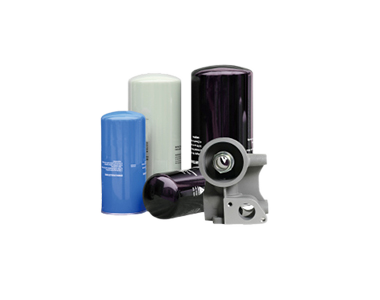
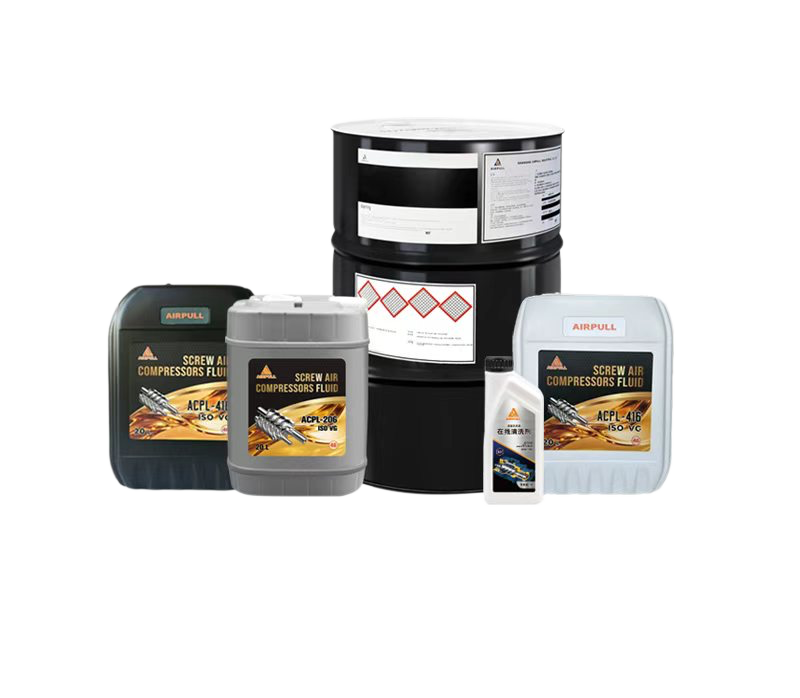
A standard service kit contains the air filter, oil filter, and air oil separator for one maintenance cycle — some kits also include lubricant. Kits matched to your compressor model eliminate the risk of missing a component at service time.
Not Sure Which Filter Your Compressor Needs? Talk to AIRPULL
AIRPULL is a specialized air compressor filter manufacturer based in Xinxiang, China — one of the world's filtration industry hubs. We produce air filters, oil filters, and air oil separator elements compatible with Atlas Copco, Ingersoll Rand, Sullair, Kaeser, CompAir, Gardner Denver, and other major brands, with certified quality management (ISO 9001 / ISO 14001 / ISO 45001) behind every element that leaves our factory.
Send us your OEM part number or compressor model, and our team will return a free cross-reference with full specifications within one business day. Distributors and OEM buyers: ask about sample orders, kit programs, and factory-direct pricing.
→ Contact the AIRPULL team today — cleaner air, lower energy bills, and zero guesswork.