












How to Test a Best Industrial Air Filter
If your compressed air line feeds paint booths, food packaging, pharma, or CNC tools, a weak filter is not a nuisance — it is a liability. Contaminated air destroys product, wrecks instruments, and silently drives up energy cost. The problem is that most buyers shop for a best industrial air filter on price and a spec sheet they never verify. This guide shows you how to actually test a compressor filter, in the field or on the bench, so "best" means measured, not marketed.
1Why Testing Your Compressor Filter Matters
A filter only earns the label "best industrial air filter" if it performs after installation — not just on the box. Three costs show up the moment a filter underperforms:
Testing turns guesswork into numbers. You confirm the filter does what the datasheet claims — before it costs you production.
2What "Best" Actually Means
Before you test, define the metrics. A genuine best industrial air filter is specified by measurable performance, not adjectives:
- Filtration efficiency / β-ratio — βₓ = (particles upstream ÷ particles downstream) at size x; efficiency = (β−1)/β × 100%. A β₁₀₀₀ = 99.9% at 10 µm.
- Final filtration rating — absolute micron rating the media reliably holds (not the looser "nominal" number).
- Pressure drop (ΔP) — clean and loaded differential pressure at rated flow.
- Dust-holding capacity — grams of dust before ΔP hits the change-out limit.
- Oil carryover — residual oil (mg/m³) for coalescing and separator elements.
- Service life — hours/months under your actual duty cycle.
| Metric | What a "best" compressor filter delivers |
|---|---|
| Particle removal | ISO 8573-1 Class 1–2 for critical air |
| Oil carryover (separator) | < 0.01 mg/m³ (Class 1) |
| Clean ΔP | Low, stable, matches OEM baseline |
| Media integrity | No pleat gap, no bypass, bonded end caps |
36 Field Tests for Any Industrial Air Filter
You do not need a lab. These six checks cover 90% of failure modes for a compressor filter.
1. Visual & Physical Inspection
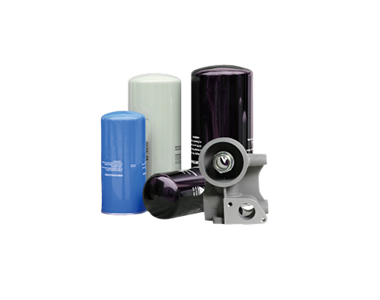
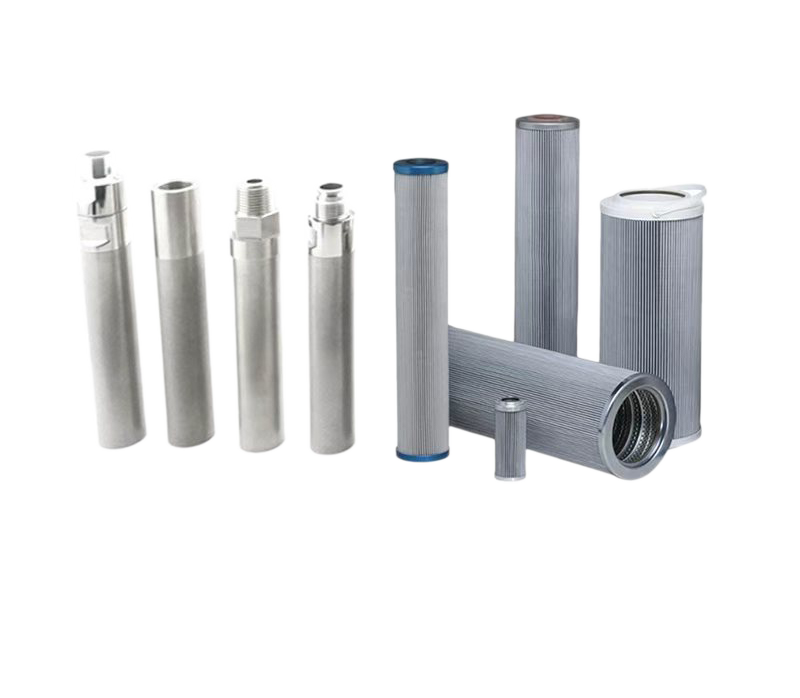
Start with the eyes. Check pleat uniformity, intact media (no tears or gaps), bonded end caps, and a clean gasket/seal. Confirm the cross-reference part number matches your OEM number. A crushed pleat or loose cap means bypass path — reject it.
2. Differential Pressure (Pressure Drop) Test
Fit a differential pressure gauge across the filter (upstream vs downstream). Record the clean ΔP at rated flow and compare to the manufacturer baseline. A best industrial air filter shows low, stable ΔP; a rising ΔP trend under normal load signals media loading or wrong element.
3. Particle Counting (ISO 8573)
Use a calibrated laser particle counter downstream of the filter. Count particles at ≥0.1, 0.5, 1 and 5 µm, then assign an ISO 8573-1:2010 class. If your air must be Class 2 but reads Class 5, the filter is not performing — regardless of its label.
4. Oil Aerosol / Coalescing Challenge Test
For oil separators and coalescing elements, challenge with a known oil aerosol and measure residual oil in the outlet air (gravimetric or analyzer). A best industrial air filter pulls oil carryover below 0.01 mg/m³. Skipping this on a rotary-screw line is the most common blind spot.
5. Bypass & Leak Test
Verify the air cannot sneak past the media: inspect the seal seating, run a pressure-decay or soap-bubble test on housings, and confirm no end-cap缝隙. Any leak invalidates every other test result.
6. Flow vs Pressure Curve
Confirm the element delivers rated flow at rated pressure without exceeding the allowable ΔP. Plot flow against pressure; a best industrial air filter tracks the published curve, not a hopeful approximation.
4Benchmarks & ISO 8573 Classes
The table below is the quick reference for judging any claimed best industrial air filter:
| ISO 8573-1:2010 class | Particle limit (≥0.1 µm, per m³) | Typical use |
|---|---|---|
| Class 1 | ≤ 20 000 | Pharma, electronics, breathable |
| Class 2 | ≤ 400 000 | Food & beverage, paint |
| Class 4 | ≤ 10 000 000 | General plant air, tools |
Match the class to the application, then test to prove you hit it. Spec without verification is just a promise.
5Common Testing Mistakes
- Testing only after failure. Baseline when new, then trend ΔP monthly.
- Ignoring the ΔP trend. A single reading hides gradual loading.
- Wrong challenge aerosol. Test oil separators with oil, not just dust.
- Skipping oil carryover. Especially fatal on oil-injected screw units.
- No documented baseline. You cannot prove "best" without the first number.
6Pre-Order / Pre-Installation Checklist
- OEM part number confirmed via cross-reference
- Absolute micron rating & β-ratio stated (not just "nominal")
- Clean ΔP matches your compressor's rated flow
- ISO 8573 class verified by particle count
- Oil carryover tested for separator / coalescing elements
- Supplier provides test data or certifications
- Clear return & fitment-guarantee policy
7Frequently Asked Questions
How often should I test my compressor filter?
Baseline at installation, then trend differential pressure monthly and run a full particle/oil test at each scheduled service or whenever air quality complaints appear.
Can I test a filter without lab equipment?
Yes. A differential pressure gauge and a visual inspection catch most failures. Particle counters and oil analyzers are worth renting for critical (Class 1–2) air.
Is a higher β-ratio always better?
Not alone. Very high efficiency can raise ΔP and shorten life. The best industrial air filter balances efficiency, pressure drop, and dust capacity for your duty cycle.
Do compatible filters test as well as OEM?
A well-made compatible compressor filter can meet OEM-equivalent specs — but only verification proves it. Always request the cross-reference and test data before bulk purchase.
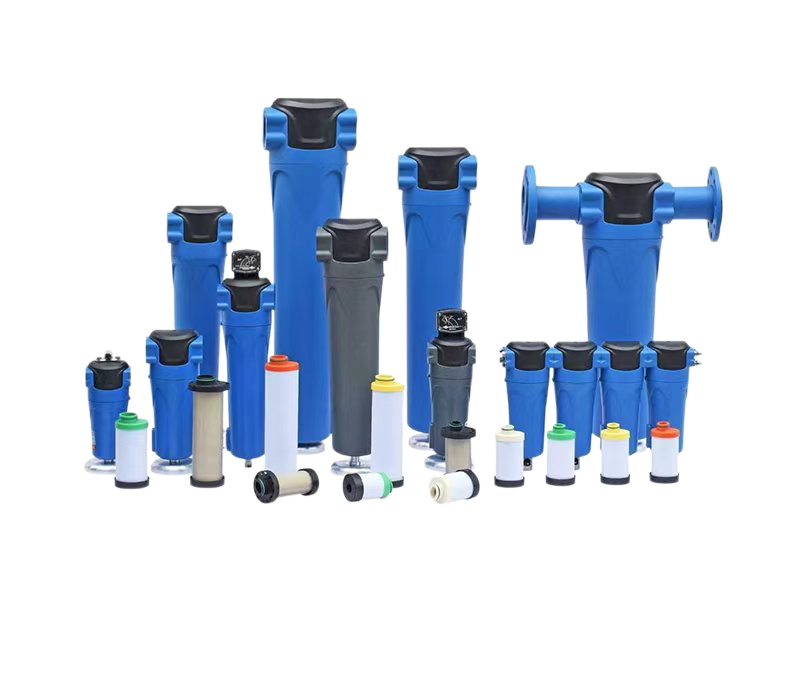
Testing a best industrial air filter is mostly discipline: define the metrics, baseline at install, then verify efficiency, ΔP, and oil carryover on a schedule. Do that, and your compressed air stays clean, your energy bill stays flat, and your production stays uncompromised. Explore the AIRPULL filter catalog for cross-referenced elements built and tested to OEM-equivalent standards.