










What Causes High Differential Pressure in an Oil Separator?
Has your air compressor started showing an unusually high oil separator differential pressure alarm? Is the pressure drop across the oil separator increasing, even though the compressor is still running? This is more than just a maintenance warning. High differential pressure in an oil separator can reduce compressor efficiency, increase energy consumption, and eventually lead to unexpected shutdowns. If left unresolved, it may also indicate a developing problem with the separator element or the compressor's oil circulation system.
1. What Is Oil Separator Differential Pressure?
Oil separator differential pressure refers to the pressure difference between the inlet and outlet of the oil separator element in an oil-injected screw air compressor.
During normal operation, compressed air passes through the separator element, where oil droplets are removed and returned to the compressor's lubrication system.
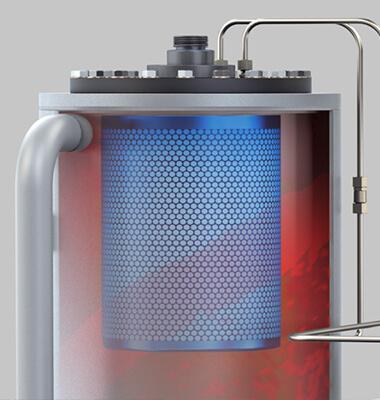
Figure 1 — Cutaway of an oil separator vessel: compressed air flows through the coalescing element, and separated oil returns through the scavenge line. Any restriction along this path raises differential pressure.
As air flows through the filter media, it naturally encounters resistance. This creates a pressure drop. A properly selected and functioning oil separator maintains a relatively low and stable differential pressure while providing effective oil separation.
However, when the pressure difference becomes abnormally high, it may indicate restricted airflow, contamination, or a problem with the separator or its surrounding system.
In simple terms: the higher the differential pressure, the more resistance the compressed air may be experiencing as it passes through the separator.
2. Six Common Causes of High Differential Pressure in an Oil Separator
But what causes oil separator differential pressure to rise? Is the separator element clogged, incorrectly installed, or affected by operating conditions? Here are the six causes worth checking first.
Cause 1: Clogged or Contaminated Oil Separator Element
One of the most common reasons for high differential pressure is a clogged oil separator element. Over time, dust, carbon deposits, oil degradation products, and other contaminants can accumulate within the filter media. These deposits restrict airflow and increase resistance across the separator.
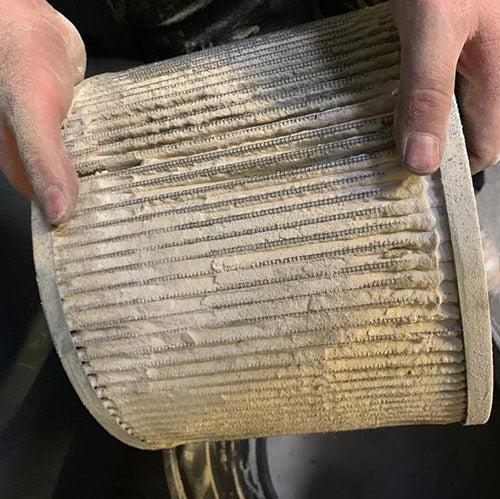
Figure 2 — A heavily contaminated separator element: deposits block the media, restrict airflow, and drive differential pressure above the manufacturer's limit.
Common contributing factors include poor-quality or contaminated compressor oil, extended oil separator service intervals, high dust levels in the operating environment, inadequate air intake filtration, and oil oxidation with carbon buildup.
How to fix it: inspect the separator element and check its differential pressure against the compressor manufacturer's recommended limits. If the element is heavily contaminated or has reached its service limit, changing it out is generally the appropriate solution.
Cause 2: Incorrect Oil Separator Element
Not all oil separator elements are interchangeable. Using an element with incorrect dimensions, unsuitable filter media, or an inappropriate airflow capacity can create excessive resistance. Even if an element physically fits inside the separator tank, it may not meet the compressor's filtration and airflow requirements.
Potential issues include incorrect separator dimensions, unsuitable filter media, insufficient filtration area, poor airflow capacity, and an incompatible sealing structure.
How to fix it: verify the compressor model, OEM part number, separator dimensions, and operating requirements before purchasing. Choosing a compatible oil separator element is essential for maintaining both filtration performance and normal pressure drop.
Cause 3: Excessive Airflow or Compressor Overloading
An oil separator is designed to operate within a specific airflow range. When a compressor operates beyond its rated capacity, the increased airflow may raise the velocity of air passing through the separator media. This can increase pressure drop and potentially affect oil separation performance.
Possible reasons include compressor operation beyond its rated capacity, incorrect compressor sizing, unusual operating conditions, and increased air demand beyond the system's design capacity.
How to fix it: check the compressor's operating load and actual airflow against the manufacturer's specifications. Make sure the selected separator element is suitable for the compressor's rated capacity and operating conditions.
Cause 4: Poor-Quality Filter Media or Improper Manufacturing
The performance of an oil separator depends heavily on its filter media and manufacturing quality. Low-quality or unsuitable media may have excessive initial resistance, inconsistent fiber distribution, or insufficient filtration area. Poor manufacturing processes can also affect pleat uniformity, sealing, and the overall structure of the element. These problems may result in higher initial differential pressure or unstable performance during operation.
How to fix it: choose oil separator elements manufactured with suitable filtration materials and controlled production processes. When evaluating a supplier, consider more than the purchase price — ask about initial differential pressure, filtration efficiency, residual oil content, and service life.
Cause 5: Incorrect Installation or Damaged Sealing Components
Installation problems can also contribute to abnormal pressure readings or poor separator performance.
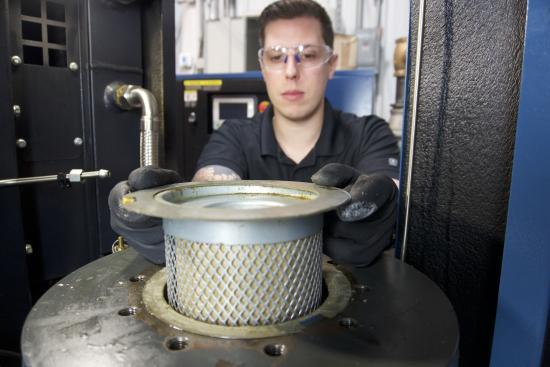
Figure 3 — Careful handling during element installation: correct positioning, undamaged gaskets, and proper sealing prevent air-oil bypass and abnormal pressure readings.
Typical examples include incorrect installation of the separator element, damaged or improperly positioned seals, loose connections, incorrect installation of the separator cover, and internal damage caused during handling. These issues may allow unfiltered air to bypass the intended flow path or cause abnormal system behavior.
How to fix it: shut down and isolate the compressor before inspection. Check the separator element, seals, gaskets, and installation position according to the compressor manufacturer's instructions. Never attempt to inspect or change the element while the system is pressurized.
Cause 6: Oil System Problems and Abnormal Operating Conditions
High differential pressure does not always mean the separator element itself is defective. Problems elsewhere in the compressor's oil circulation system may contribute to abnormal operating conditions, including incorrect compressor oil, excessive oil level, oil contamination or deterioration, abnormal operating temperature, and problems with the oil circulation or return system.
These conditions can affect oil separation performance and may contribute to premature separator contamination.
How to fix it: check oil type and level, operating temperature, oil condition, and the oil circulation system. Follow the compressor manufacturer's maintenance recommendations to identify the actual cause.
Still Seeing a High Pressure Drop Alarm?
Don't keep changing elements on guesswork. Send AIRPULL your compressor brand, model, OEM part number, or separator dimensions, and our team will help you identify a compatible element and the real cause behind the alarm.
Get a Free Compatibility Check3. How to Troubleshoot High Oil Separator Differential Pressure
Before changing the oil separator element, a systematic inspection can help identify the source of the problem and prevent unnecessary maintenance costs.
| Inspection Item | What to Check | Recommended Action |
|---|---|---|
| Differential pressure | Actual reading and trend | Compare with manufacturer limits |
| Separator element | Contamination, damage, service life | Change out if necessary |
| Compressor oil | Oil type, level, and condition | Correct or change the oil |
| Airflow | Actual airflow and compressor load | Check against rated capacity |
| Installation | Seals, gaskets, and positioning | Reinstall or change damaged parts |
| Oil system | Oil circulation and return | Inspect related components |
Important: always compare differential pressure readings under comparable operating conditions. Use the compressor manufacturer's alarm and change-out limits rather than relying on a universal pressure-drop value.
4. When Should You Replace an Oil Separator Element?
An oil separator element should not be changed based on operating hours alone. The actual service interval depends on compressor design, operating conditions, oil quality, air quality, and the separator's performance.
Consider inspecting or changing the element when you notice:
- Differential pressure reaches the manufacturer's change-out limit.
- Differential pressure increases abnormally over a short period.
- Oil carryover increases.
- The separator element is visibly damaged or contaminated.
- The compressor triggers a separator-related maintenance alarm.
Changing the separator at the appropriate time helps maintain stable airflow, reduce unnecessary energy losses, and protect downstream compressed air equipment.
5. How to Choose the Right Oil Separator
Selecting the right element is not simply a matter of matching the compressor brand. For reliable operation, pay attention to the following factors.
- OEM part number compatibility: use the original part number or compressor model to identify a suitable element.
- Correct dimensions: check the height, outer diameter, inner diameter, connection structure, and sealing dimensions.
- Filtration performance: consider filtration efficiency, residual oil content, and the separator's ability to maintain stable performance.
- Initial differential pressure: a suitable separator should provide effective oil separation without creating unnecessary airflow resistance.
- Operating conditions: consider compressor airflow, operating pressure, temperature, oil type, and working environment.
Working with an experienced filter manufacturer can help reduce the risk of incorrect selection and unnecessary downtime.
6. AIRPULL: Your Oil Separator Manufacturing Partner
Since 1996, AIRPULL has focused on air compressor filtration solutions, supplying oil separators, air filters, oil filters, and other industrial filtration products. With manufacturing experience, technical support, and a broad product range, AIRPULL helps distributors, compressor service providers, and industrial users identify suitable filter elements for different compressor brands and applications.
- Oil separator solutions: compatible elements for a wide range of compressor applications
- Part number cross-reference: support for identifying suitable elements using OEM numbers and compressor information
- Custom solutions: filter elements developed according to specific dimensions, filtration requirements, and operating conditions
- Manufacturing capacity: annual production capacity of 2 million filter sets
- Reliable supply: stocked products and production orders to support different purchasing requirements
Whether you need a standard oil separator or a customized filtration solution, AIRPULL is ready to support your business.
7. Frequently Asked Questions
Q1: What is a normal differential pressure for an oil separator?
There is no single pressure-drop value suitable for every compressor. Normal and change-out limits vary by compressor model, separator design, airflow, and operating conditions. Always refer to the manufacturer's specifications.
Q2: Can a clogged oil separator cause high differential pressure?
Yes. Contaminants and deposits can accumulate in the filter media, restricting airflow and increasing resistance across the separator element.
Q3: Does high differential pressure always mean the oil separator needs replacing?
Not necessarily. Incorrect installation, excessive airflow, unsuitable filter elements, and oil system problems may also contribute. Inspect the complete system before deciding to change the element.
Q4: Can high differential pressure increase energy consumption?
Yes. Excessive pressure drop can increase the pressure the compressor needs to maintain to deliver the required downstream pressure, potentially increasing energy consumption.
Q5: How can I find a compatible oil separator?
You can provide the compressor brand, model, OEM part number, or separator dimensions. A professional filter manufacturer can help cross-reference the information and identify a suitable element.
Don't Ignore High Differential Pressure
Identifying the real cause early can help prevent unnecessary energy consumption, unexpected downtime, and costly maintenance. Send us your compressor brand, model, OEM part number, or separator dimensions. Our team can help identify a suitable element or discuss a customized filtration solution for your application.
Contact AIRPULL TodayAIRPULL – Compressed Air Filtration Since 1996.