











Why Is Your Air Compressor Carrying Over Oil? 6 Causes You Shouldn't Ignore
Your air compressor is consuming more oil than usual. Oil is appearing in the pipelines, downstream filters are becoming contaminated, and maintenance costs keep rising. Air compressor oil carryover is more than just an oil consumption problem. If left unresolved, it can affect compressed air quality, contaminate production equipment, increase maintenance expenses, and even disrupt critical industrial operations.
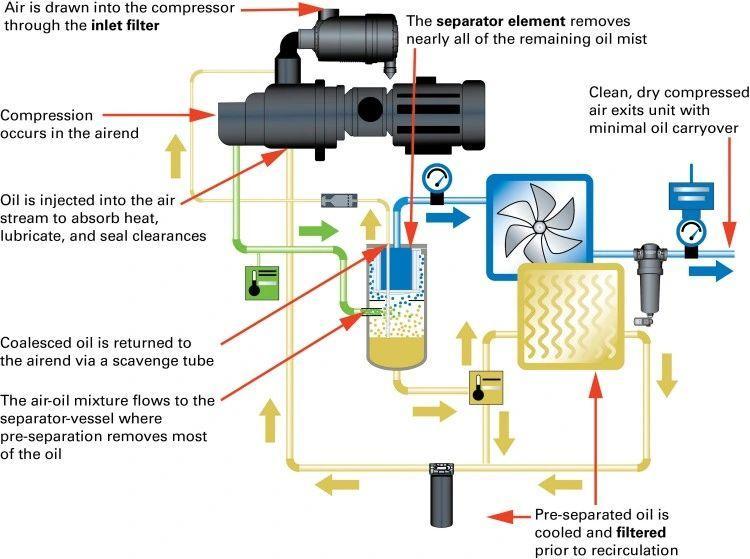
Oil circuit of an oil-injected screw compressor: the air/oil mixture flows to the separator vessel, the separator element removes the remaining oil mist, and coalesced oil returns to the airend via the scavenge tube.
Is Your Oil Separator Failing, or Is Something Else Causing the Problem?
Many compressor operators immediately replace the oil separator when they notice excessive oil in the compressed air. However, the real cause may be related to oil levels, the oil return system, improper installation, or abnormal operating conditions. Replacing the wrong component can waste both time and money without solving the underlying issue.
Air compressor oil carryover occurs when lubricating oil passes through the air/oil separation system and enters the compressed air outlet. In an oil-injected screw compressor, lubricating oil cools, seals and lubricates. During compression, oil mixes with air and enters the oil separator tank, where the oil separator element removes fine oil droplets. The separated oil is returned to the lubrication system, while the compressed air continues downstream. When the separator is damaged, clogged, incorrectly installed, or operating outside its designed conditions, excessive oil may enter the compressed air network.
Common signs of air compressor oil carryover
- Unusually high lubricating oil consumption
- Visible oil in compressed air pipelines
- Oil contamination in air receivers and downstream filters
- Oil residue around pneumatic equipment
- Reduced compressed air quality
- Frequent maintenance of downstream filtration equipment
6 Common Causes of Air Compressor Oil Carryover
1. A Worn or Damaged Oil Separator Element
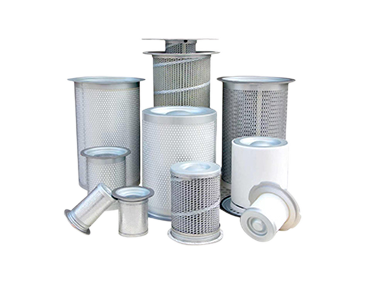
The oil separator element separates fine oil aerosols from compressed air. Over time, the filter media may deteriorate, become damaged, or lose its separation performance. A damaged element or compromised sealing system may allow excessive oil to pass into the compressed air outlet.
How to solve it: inspect the element regularly and replace it according to the manufacturer's recommended maintenance schedule or when abnormal performance is confirmed. Choosing a high-quality replacement element with suitable filtration performance is essential for reliable separation.
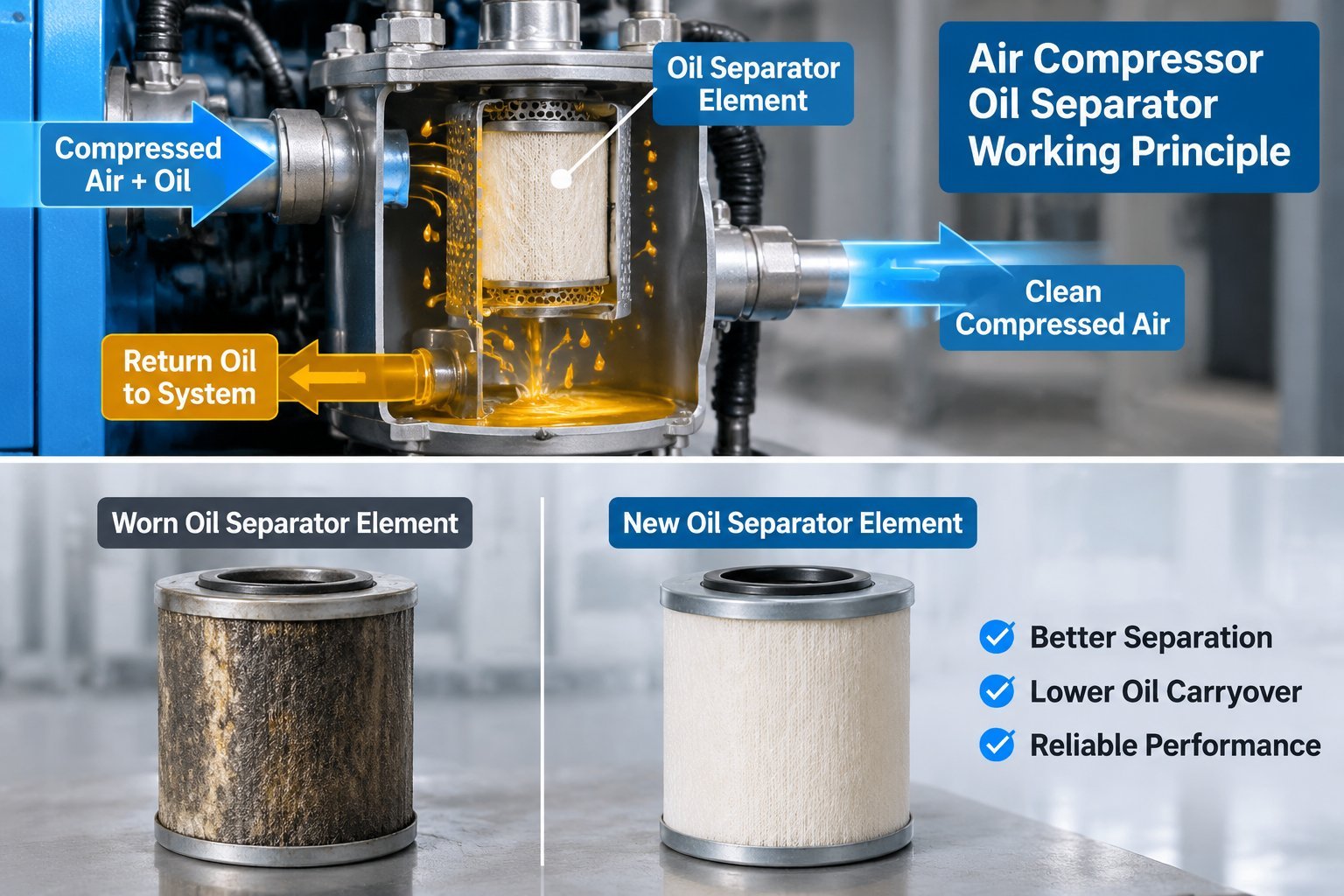
Working principle of the air/oil separator, and the difference between a worn element and a new one.
2. High Differential Pressure Across the Oil Separator
As the element accumulates contaminants, airflow resistance increases. Excessive differential pressure reduces compressor efficiency and may indicate that the element is approaching the end of its service life. Although it does not always directly cause oil carryover, it is an important warning that the separation system needs inspection.
How to solve it: monitor differential pressure regularly, compare readings with the manufacturer's recommended limits, inspect the element if the pressure drop becomes abnormal, and replace it when necessary.
3. Incorrect Oil Level in the Separator Tank
The oil level inside the separator tank directly affects compressor operation. If the oil level is too high, excessive oil may enter the separation system and increase the risk of oil carryover.
How to solve it: check the oil level according to the manufacturer's instructions, avoid overfilling, and always use the recommended lubricating oil.
4. A Blocked or Damaged Oil Scavenge Line
The oil scavenge line returns separated oil from the bottom of the element to the lubrication system. If it becomes blocked, damaged, or improperly connected, separated oil may not return properly. Oil can accumulate in the separator assembly and potentially be carried into the compressed air stream.
How to solve it: inspect the oil return line, check the scavenge tube and fittings, make sure the return passage is clear, and verify that the line is correctly installed and connected.
5. Improper Installation of the Oil Separator Element
Even a high-quality separator may not perform properly if it is incorrectly installed. Common problems include damaged sealing gaskets, improper positioning, loose connections, incorrect installation of the scavenge tube, and poor sealing between the element and housing. These problems may allow oil-containing air to bypass the filter media.
How to solve it: always follow the manufacturer's installation instructions and check all sealing surfaces, gaskets, and connections before restarting the compressor.
6. Operating Conditions Outside the Recommended Range
Excessive airflow, unstable operating pressure, high operating temperature, and unsuitable lubricating oil may all contribute to abnormal oil carryover.
How to solve it: check the operating parameters and ensure the equipment runs within its specified range. If oil carryover continues after basic inspections, examine the entire separation system in detail.
How to Reduce Air Compressor Oil Carryover
Preventive maintenance can significantly reduce the risk of oil carryover and extend component service life. Five practical recommendations:
- Replace oil separator elements on time. Do not wait until the element becomes severely blocked or damaged.
- Use compatible, high-quality replacement elements that match the compressor model, operating pressure, airflow requirements, and installation dimensions.
- Monitor differential pressure to identify abnormal filter resistance before it affects the whole system.
- Check the oil return system so separated oil can return properly to the lubrication system.
- Maintain proper operating conditions: keep oil levels, temperatures, and pressures within the recommended range.
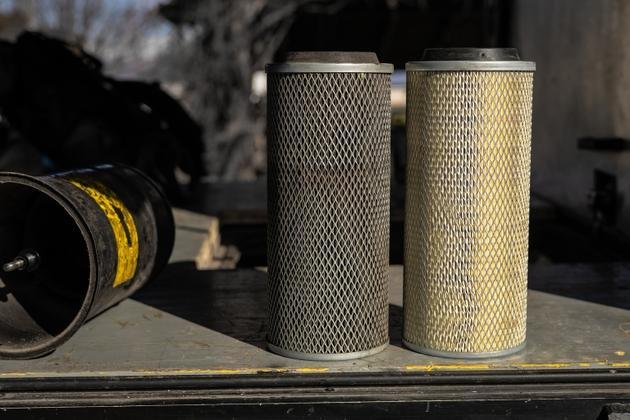
A clogged element next to a clean one: replacing filter elements on time keeps separation performance stable and reduces unexpected downtime.
How to Choose the Right Air Compressor Oil Separator
When replacing an oil separator element, choosing the correct product is just as important as identifying the original problem. A replacement element should not be selected based on dimensions alone.
| Selection Factor | What to Check |
|---|---|
| Dimensions | Height, outer diameter, inner diameter |
| Filtration Performance | Separation efficiency and residual oil content |
| Pressure Drop | Initial differential pressure |
| Filter Media | Suitable fiberglass or composite filter media |
| Operating Conditions | Working pressure and temperature |
| Compatibility | Compressor brand, model, and OEM part number |
Not Sure If Your Oil Separator Is the Problem?
Do not replace components based on guesswork. Send AIRPULL your compressor brand, model, OEM part number, or existing oil separator dimensions, and our team can help identify a suitable replacement element for your equipment. The right separator makes a difference.
Contact AIRPULL TodayAIRPULL: Your Air Compressor Oil Separator Manufacturer
Since 1996, AIRPULL has focused on compressed air filtration solutions, supplying air/oil separator elements designed for a wide range of oil-injected screw compressors.
- Wide product range: elements compatible with various compressor brands and models
- Reliable filtration performance: carefully selected media and controlled manufacturing processes
- Cross-reference support: replacement identification by OEM part number, dimensions, or equipment information
- Custom solutions: elements developed for specific equipment requirements and operating conditions
- Stable supply: manufacturing capacity and inventory coordination for distributors and industrial customers
Whether you are an air compressor parts distributor, wholesaler, maintenance provider, or equipment manufacturer, AIRPULL can support your oil separator sourcing requirements.
Frequently Asked Questions About Air Compressor Oil Carryover
What causes an air compressor to carry over oil?
Common causes include a worn or damaged oil separator element, high differential pressure, excessive oil levels, a blocked oil scavenge line, improper installation, and unsuitable operating conditions.
How do I know if my air compressor oil separator needs replacing?
Common warning signs include increased oil carryover, abnormal differential pressure, visible damage, and performance outside the manufacturer's specifications.
Can a clogged oil separator cause oil carryover?
A clogged separator can cause excessive pressure drop and abnormal operating conditions. However, oil carryover may also result from other problems, so the entire separation system should be inspected.
How often should an air compressor oil separator be replaced?
The replacement interval depends on the compressor model, operating environment, lubricating oil condition, and manufacturer's recommendations. Always refer to the equipment maintenance manual and actual operating data.
Can I use an aftermarket oil separator instead of an OEM element?
Yes, provided the replacement element is properly matched to the compressor and meets the required filtration, pressure, temperature, structural, and sealing specifications.
How can I find the correct replacement oil separator?
Provide the compressor brand, model, OEM part number, or existing separator dimensions. A professional filter manufacturer can help identify a suitable replacement.
Conclusion: Solve the Cause, Not Just the Symptom
Air compressor oil carryover should never be ignored. It can increase lubricant consumption, contaminate compressed air systems, and create unnecessary maintenance expenses. In many cases, the oil separator element is an important part of the solution, but proper diagnosis also requires checking the oil level, oil return system, installation, and operating conditions. Choosing the right oil separator and maintaining it properly helps improve compressed air quality and keeps your equipment operating reliably.
Looking for a Reliable Air Compressor Oil Separator Manufacturer?
Contact AIRPULL today. Send us your OEM part number, compressor model, or filter dimensions, and our team will help you find a suitable replacement solution. AIRPULL, compressed air filtration solutions since 1996.
Contact AIRPULL Today