










Your trusted compressed air filtration expert
30 Years Dedicated to Compressed Air Filtration & Separation Technology. Serving Petrochemical, Power, Cement, Plastic, Laser Cutting & More
Home / All / Product & Technical FAQs / What is the difference between an air filter, an oil filter, and an air oil separator?

What is the difference between an air filter, an oil filter, and an air oil separator?

Update Time:2026/9/22

sales@airpulltech.comThe air filter removes dust and particulates from the air entering the compressor; the oil filter removes contaminants from the lubricating oil; the air-oil separator extracts lubricating oil from the compressed air and recovers it before discharge. Working together, they protect the compressor's core components, improve compressed-air quality, and keep the equipment running efficiently.

Three-Filter Comparison at a Glance

ItemAir Filter (Intake)Oil FilterAir-Oil Separator
LocationCompressor air inletIn the lubricant circulation lineInside the separator tank
What it filtersDust and particles from ambient airMetal debris, carbon deposits, and contaminants in the oilOil mist and droplets entrained in compressed air
Main functionProtects the airend rotors and bearings from wearProtects oil-circuit components such as bearings, shaft seals, and coolersRecovers lubricant and ensures clean discharge air
Typical mediaFilter paper / non-woven / polyester fiberFilter paper + metal mesh supportGlass-fiber composite layers + support layers
Compatible interval2,000 h2,000 h4,000 h
If it failsInsufficient intake -> higher energy use, lower outputPoor lubrication -> more wear, more noiseHigher oil carryover, discharge air oil content exceeds limits

Air Filter in Detail (Air Filter / Intake Filter)

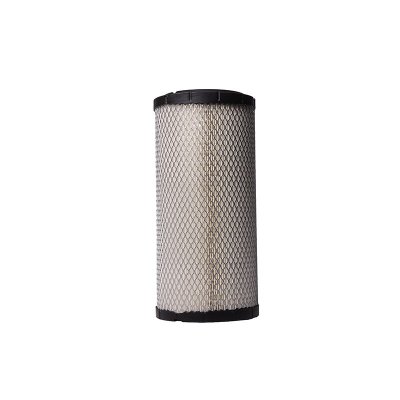
  • Location: mounted at the compressor air inlet - the first line of defense for air entering the machine
  • Function: traps solid particles such as dust, sand, and fibers from the air
  • Why it matters: a single tiny grain of sand entering the airend can score the precision rotor surfaces
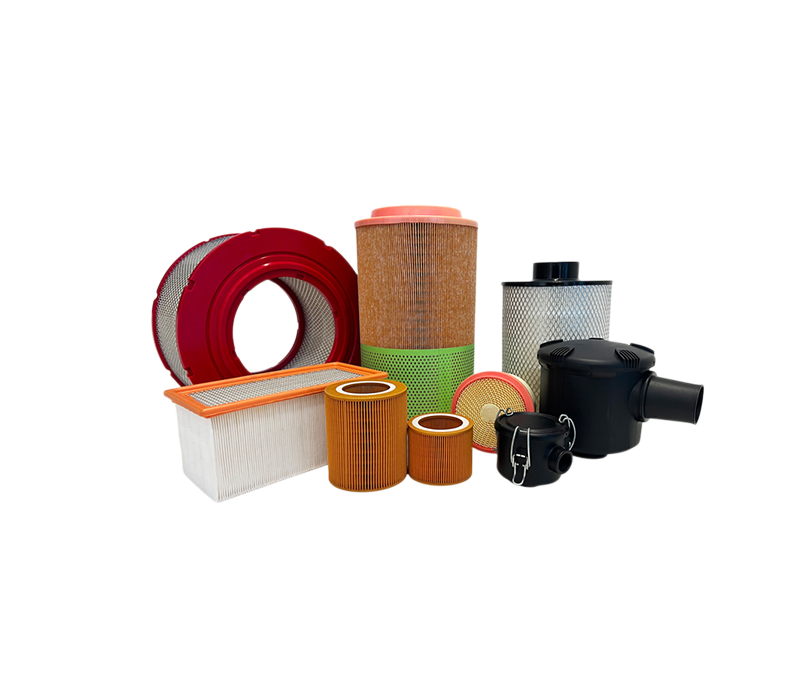
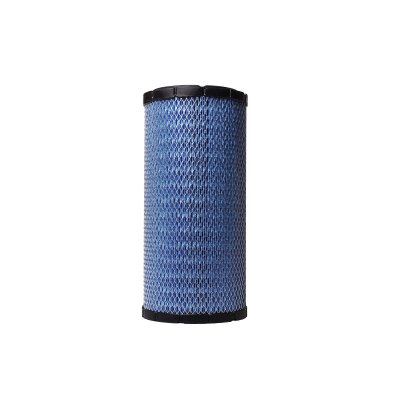
  • Common types: panel, cartridge (round/oval), and pleated elements
  • The harsher the environment, the more frequent the changes: high-dust settings like mines, cement plants, and woodworking shops need more frequent inspection

Oil Filter in Detail (Oil Filter / Oil Filter Element)

  • Location: installed in series in the lubricant circuit, typically after the oil pump and before the bearings/cooler
  • Function: filters out metal wear particles, carbon deposits, and oxidation products generated during oil circulation
  • Why it matters: clean lubricant is the compressor's lifeblood - the oil filter is its kidney
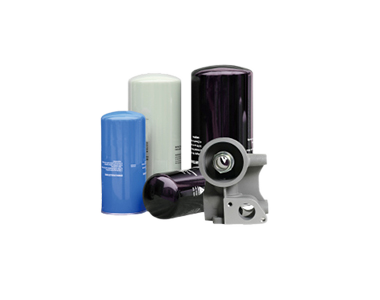
  • Common forms: spin-on (threaded) and cartridge types
  • Early first change: new machines generate more contaminants during break-in; the first change is recommended after 500 operating hours

Air-Oil Separator in Detail (Air-Oil Separator / Separator Element)

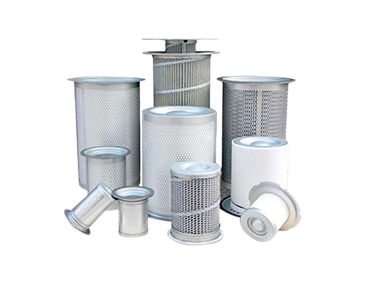
  • Location: inside the separator tank - the final checkpoint before compressed air is discharged
  • Function: uses centrifugal force, gravity settling, and fine filtration to separate entrained oil mist from compressed air and return it to the oil circuit
  • Why it matters: directly determines discharge oil content - affecting downstream pneumatic equipment and product quality
  • Common construction: outer coalescing layer + inner fine-separation layer of dual- or multi-layer glass-fiber composite
  • The most expensive of the three filters - but the cost of extended use far exceeds the price of the element itself

How the Three Work Together

  • Air filter failure -> dust enters the airend -> accelerates oil contamination -> shortens oil filter life -> intensifies airend wear
  • Oil filter failure -> contaminants circulate with the oil -> clog the separator's micropores -> separation efficiency drops -> oil carryover increases
  • Separator failure -> large amounts of lubricant are carried away by the compressed air -> oil consumption spikes -> may cause low-oil shutdown
  • Conclusion: the three filters are one system - a failure in any link affects the others. Synchronized maintenance is recommended.

How to Buy the Right Set of Three Filters
  • Match OEM part numbers or AIRPULL cross-reference models - avoid leaks or bypass caused by dimensional mismatch
  • Don't buy on price alone - inferior media may seem fine at first but can collapse or rupture within hours
  • Buy the complete set from one supplier - consistent quality system and clear accountability
  • Keep compatible records - helps trace problem sources and optimize future maintenance intervals

Not sure which filters your equipment needs?

Send us your compressor brand and model at  sales@airpulltech.com- we will match a complete three-filter solution for you.

30 Years Dedicated to Compressed Air Filtration & Separation Technology. Serving Petrochemical, Power, Cement, Plastic, Laser Cutting & More
Contact Person
Jeff
Full Name:
Jeff
Tel:

+86 19836212010

Email:
sales@airpulltech.com
WhatsApp:
8619836212010
Address:
No. 1506, Xinqi Street, National Chemical and Physical Power Sources Industrial Park, Muye District, Xinxiang City, Henan Province (1000 meters north of the intersection of Beihuan Road and Xinqi Stre

Please send your message to us

*Email
Phone
*Title
*Content
Upload
  • Only supports .rar/.zip/.jpg/.png/.gif/.doc/.xls/.pdf, maximum 20MB.
Your trusted compressed air filtration expert